
ABOUT US
Founded in Hamburg in 1920, the Buss Group is still owner-managed today - the managing partner is Dr. Johann Killinger. For many decades, Buss was primarily a port company with at its peak four handling terminals in the Port of Hamburg. Today, the group of companies is broadly positioned in the business fields of port logistics, wind energy, gas and hydrogen, logistics real estate, shipping, and investments. With over 500 employees, the company offers its services in Europe, the USA and Singapore.
BUSINESS AREAS
Successful through constant change since 1920
In the more than 100-year history of the Buss Group, one thing in particular has been constant: change. The company's beginnings go back to the Gerd Buss stevedoring company, which specialized in loading and unloading ships in the Port of Hamburg. Over the decades, five other business areas were added in addition to port logistics.
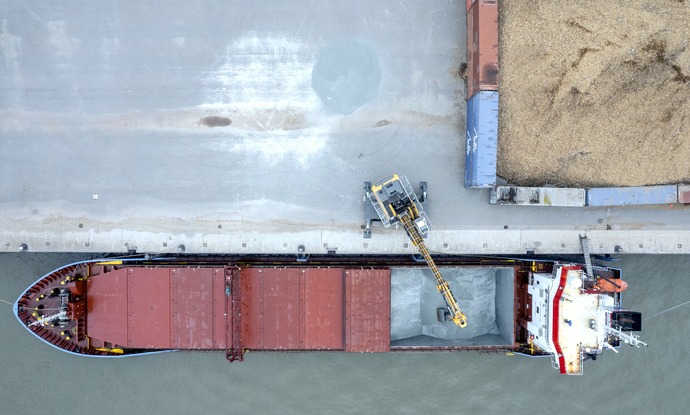
Buss Port Services provides stevedoring services for general cargo vessels, plant logistics and specialized employee leasing.
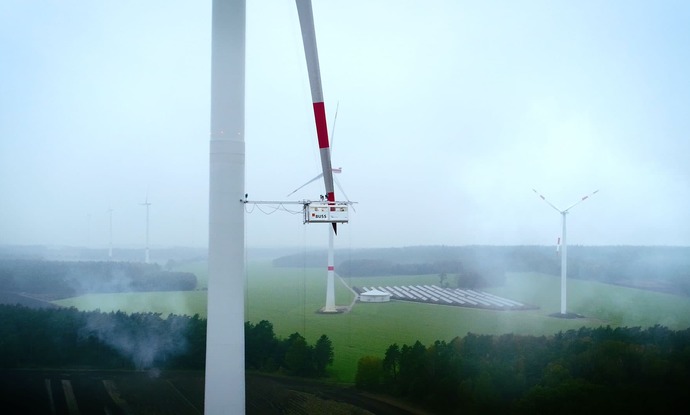
Buss Energy specializes in the assembly and maintenance of wind turbines and port logistics for offshore wind farms.
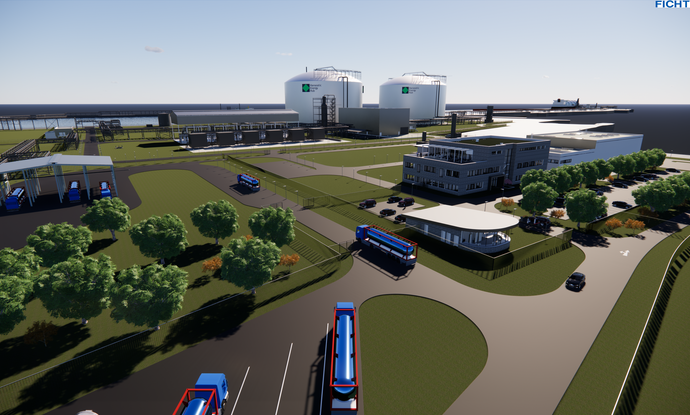
Hanseatic Energy Hub GmbH is developing an import terminal for liquefied natural gas (LNG) in Stade, which is planned to go into operation in 2026.
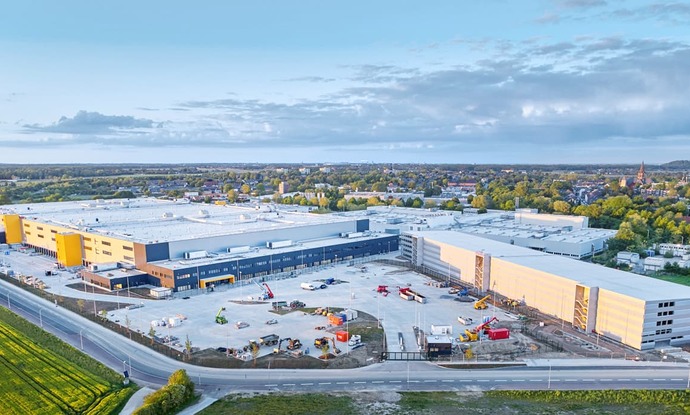
Logistics Real Estate
Ixocon focuses on the nationwide project development of logistics real estate and the revitalization of brownfield sites.
Shipping
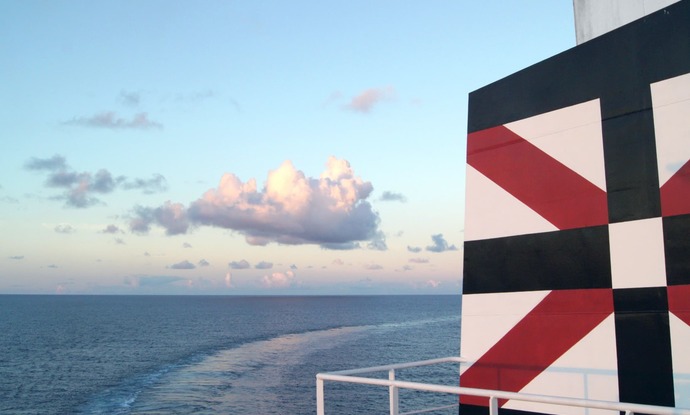
In 2017, Buss Shipping merged with the Leonhardt & Blumberg shipping company. The company manages more than 40 container ships.
Investments
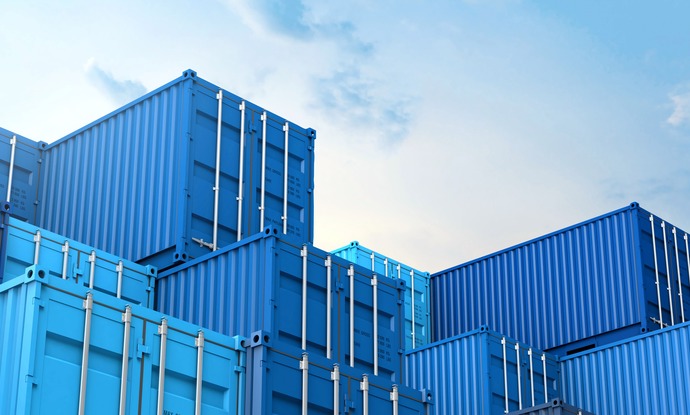
The issuing house Buss Capital Invest offers its customers investment products primarily in the field of container investments.
Management
The Management of the Buss Group

Dr. Johann Killinger
Managing Partner
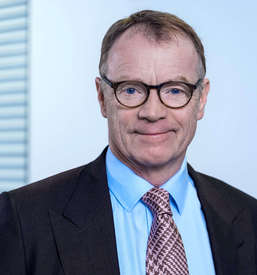
Dr Johann Killinger is managing partner of the Buss Group. After studying law in Freiburg, Munich, San Francisco and Berlin, he spent a year at the management consultancy Roland Berger in Munich.
He joined the Buss Group in 1991 as project manager for a logistics project in the port of Hamburg. In 2002, he took over the entire shareholding in the company. Under his leadership, the Buss Group, originally founded as a stevedoring company, developed into a broad-based maritime logistics company with a special focus on energy. This includes the development and operation of base ports for the offshore wind industry, the planning and realisation of the Hanseatic Energy Hub - the landside LNG terminal in Stade - as well as the green hydrogen project Hanseatic Hydrogen, which is planning a 100+ megawatt electrolyser, also located in Stade.
Eckhard Jung
Chief Financial Officer (CFO)
Eckhard Jung is CFO of the Buss Group. Before taking up his role at the company, he held the position of CFO at the Oiltanking Group, which builds and operates tank terminals for the storage of energy and chemicals worldwide and is a subsidiary of Hamburg-based Marquard & Bahls AG. After starting his career as a management consultant at KPMG, he held various management positions, including Business Manager at Techem AG and senior finance and business development roles at Wärtsilä, a Finnish group and supplier to the shipping and energy industries.
AT A GLANCE
The Buss Group in Figures
Years of Buss
The Buss Group was founded in Hamburg in 1920.
Business Areas
Buss comprises the business segments port logistics, wind energy, gas and hydrogen, logistics real estate, shipping and investments.
500 Employees
We offer our services with more than 500 employees in Europe, the USA and Singapore.
Nationalities
Our colleagues from 30 countries of origin work together successfully.
1920-Today
Our History
It all began in 1920 with Gerd Buss in Hamburg. The former ship's officer set up his own business for loading and unloading ships under his own name. In the 1930s, Buss was one of the leading stevedoring companies in the Port of Hamburg. However, the container presented the traditional port company with an existential challenge. Buss had to reinvent itself. Today, the Buss Group is broadly positioned in the business fields of port logistics, wind energy, gas and hydrogen, logistics real estate, shipping and investments.
1920-1939

1945–1969
1970–1990
1990–2001
2001 bis 2020
Buss establishes itself as a stevedoring company
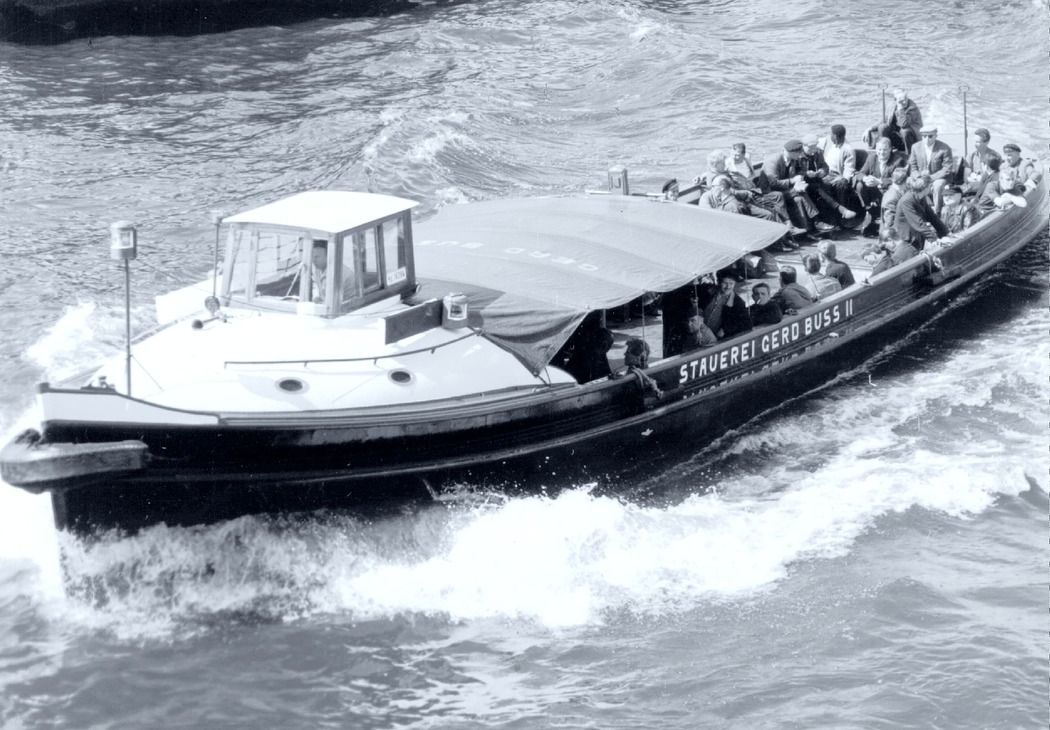
Gerd Buss founds the Gerd Buss Stevedoring Company
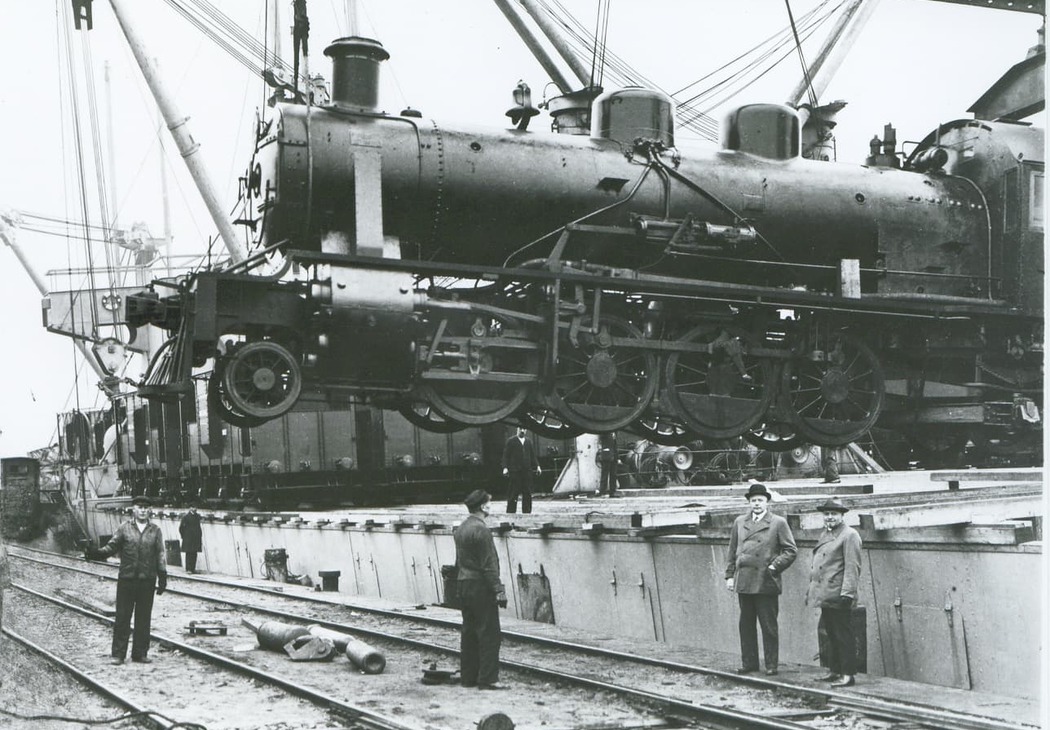
After the First World War, the economy and also the port of Hamburg experience a new beginning. In this environment, Gerhard (Gerd) Buss founds the Gerd Buss Stevedoring Company in 1920. A year later, he takes his brother Hinrich (Uncle Hinni) on as a partner in the company. The brothers bring good qualifications with them: Gerd had previously served at sea as an officer and had experience in cargo stowage. Hinrich was a trained shipbroker and understood the customer side - shipping companies as well as trade and industry.
Buss becomes one of the leading stevedoring companies

As early as the beginning of the 1930s, Buss was one of the leading stevedoring companies in the Port of Hamburg. Its customers include more than 20 domestic and foreign liner shipping companies as well as tramp shipping companies. On some days, Buss employs up to 1,000 stevedores. One of them is Erwin Seeler - "Old Erwin" - the father of future soccer idol Uwe Seeler.
Buss benefits from reconstruction and economic miracle
Things pick up quickly after the end of the war
The Port of Hamburg is largely destroyed during the Second World War. Initially, the Gerd Buss stevedoring company mainly handles ships for the supply of the British occupying forces. With the reconstruction of the German economy, Buss succeeds in winning back old customers. Jürgen Buss also becomes managing partner of the Gerd Buss Stevedoring Company, alongside his father Gerd and his brother Hinrich.
Economic miracle ensures full order books

In the years of the economic miracle, the company experiences a heyday with booming German exports. Buss takes over the handling of VW in Hamburg and later also in Emden. Gerd Buss dies in 1954. Buss expands its range of services and takes over Securitas, a company founded in 1958 specializing in cargo fastening and later in export packaging.
The container makes the stevedoring business increasingly obsolete
The second half of the 1960s saw radical changes. The container is an industrial revolution for conventional general cargo handling, which until then had been labor-intensive and mostly carried out by hand. Containers standardize and mechanize processes and enable an enormous leap in productivity. Transport becomes many times cheaper, faster, more punctual and safer. The stevedoring business is rapidly becoming obsolete - one of the goals of containerization. To stay in the port handling business, Buss decides to operate its own handling terminals.
Boom and Bust: Golden 70s, problems caused by containerization in the 80s
Buss merges with shipping company Aug. Bolten
In order to buy handling terminals, the Iduna insurance group gives Buss a loan from the Aug. Bolten shipping company through the intermediary of Dr. Hans Helmut Killinger, a business partner who is a friend of Jürgen Buss. When Buss is unable to repay the loan, the shareholders of Aug. Bolten, Dr. Hans Helmut Killinger and Dr. Johan Binder, step in and take over two-thirds of Buss' shares. This was because Aug. Bolten did not want to jeopardize its business relationship with Iduna. Combining Buss' capital-intensive shipping business and its profitable port services business means a significant broadening of the capital base and also tax advantages for both companies - they can expand considerably.
Buss "goes onshore" and buys conventional quay operations

Jürgen Buss, like most port and shipping companies at the time, believes that only the main trades between the main industrialized countries are containerized. He focuses on the remaining general cargo business. To secure business for the stevedoring company and improve the range of services, Buss gradually buys conventional quay operations, ULAB and Schuppen 84 (Rosskai) at the end of the 1960s, then the Afrika Terminal (now HafenCity) and the Kuhwerder Terminal and Tollerort Terminal in the 1980s. The most important customers of the terminals and the stevedoring company become the state shipping companies of the Eastern Bloc, because they continue to transport general cargo conventionally, not containerized. Buss also participates in terminals in Emden and Brunsbüttel. In the 1970s in particular, the strategy of focusing on conventional general cargo is a success. Business is initially good.
Hesitant move towards containers
As early as 1961, with the beginning of containerization, Buss sets up a working group to look into containers and corresponding business opportunities. Among other things, Buss becomes an agent for container leasing companies. Furthermore, Buss operates mobile workshops for maintenance, repair and sale of containers. In 1980, Buss develops and operates container depots throughout Germany together with Deutsche Bahn. It is not until the end of the 1980s that Buss enters the container handling business with the conversion of the Tollerort terminal into a container terminal.
Struggle for survival - The container deprives Buss of its basis for existence
Generation handover
In 1990, Jürgen Buss retires as Managing Director and shareholder. The management of the Buss Group is initially taken over by Dr. Wilfried Schmidt-Pathmann and then, between 1992 and 1999, by the former Hapag-Lloyd manager Olaf von Maydell. In 1991, Dr. Johann Killinger, today's managing partner, joins Buss as project manager for a logistics center in the port. His father, Dr. Hans Helmut Killinger, transfers his shares in Buss to him in 1994.
Buss core business collapses
The focus on conventional general cargo transport proves to be very disadvantageous after the "Wende". With the collapse of the Eastern Bloc and the rapid industrialization of Asia at the end of the 1980s, the remaining conventional liner services rapidly lose importance. Conventional general cargo handling - Buss' core business - declines rapidly. Buss gets into heavy seas.
Buss takes a tough restructuring course and has to sell silverware
The entire 1990s are characterized by efforts to consolidate the sharply declining conventional cargo handling business. Buss has to lay off hundreds of port workers and close conventional handling terminals, Rosskai, Afrika Terminal (now HafenCity) and Kuhwerder Terminal. Only Hansa Terminal, taken over by HHLA, remains. The restructuring and ongoing losses cost a lot of money, which is not available for investments in the container terminal business. Buss therefore sells the Tollerort container terminal to HHLA. Buss is also forced to divest its lucrative interests in the container depots in Germany and its holdings in Emden and Brunsbüttelb.
Buss enters the logistics and logistics real estate business

Parallel to the consolidation course in conventional general cargo handling, Buss develops the logistics and logistics real estate business under Dr. Johann Killinger in the 1990s. Today, under the name Ixocon, this business is an important pillar of the Buss Group. Buss builds modern logistics centers for Helm AG, Panasonic, Castrol and other well-known customers. In addition, Buss develops and operates the most modern hazardous goods warehouse in Germany under "Buss Safelox" from the mid-1990s. Buss Safelox is sold to a competitor after a few years.
Buss diversifies, decentralizes - and leaves the Port of Hamburg
Change of shareholder and repositioning
In 2000, Dr. Johann Killinger acquires the logistics and logistics real estate business developed under his management as sole shareholder. After reselling some logistics properties, he has the financial means to take over all the shares in the Buss Group in 2002, which is struggling as a result of the problems in the transshipment business. Together with Renko Schmidt, Killinger takes over the management of the company. In the years that followed, the company set up new business units and became increasingly decentralized. Buss becomes a financial holding company for the independently operating divisions of the group. Today, the owner-managed group of companies is broadly positioned with around 500 employees in the business segments port logistics, logistics real estate, investments, shipping and wind energy. In 2011, Buss relocated its headquarters to HafenCity. The former location in the port no longer suited Buss' activities, in which the port now plays only a minor role following the discontinuation of the handling business in Hamburg.
Buss expands outside Hamburg
Against the background of its uncertain future in the Port of Hamburg, Buss begins to develop port business outside Hamburg from 2005, initially in Sassnitz/Mukran and later with a terminal in Stade. The port activities of the Buss Group are combined under the name "Buss Ports". In Eemshaven, the Netherlands, Buss puts a large multi-purpose terminal into operation, which is primarily used for the logistics of offshore wind turbines.
Buss realigns its port activities
The high expenses associated with the closure of the Buss Hansa Terminal in Hamburg in 2016 and the associated loss of 120 jobs make it necessary to realign the business unit. Buss is divesting its inland port business and refocusing on stevedoring services. In addition, Buss offers its customers on-site plant logistics services and qualified employee leasing. Today, Buss operates terminals in Sassnitz, Stade and Eemshaven independently or in partnerships, as well as a works port in Duisburg.

Ixocon develops and manages logistics real estate throughout Germany
Modern logistics real estate is increasingly in demand on the market, also as an investment property. Therefore, the logistics real estate business, development and management, becomes a core business of Buss after the change of shareholders in 2001. In 2004, the "Logistics Real Estate" division is renamed "Ixocon". At the same time, Ixocon also becomes active outside Hamburg, initially mainly in the Frankfurt/Worms area, later throughout Germany.
High competitive pressure in the real estate boom, sustainable building in greater demand
Despite high competitive pressure, Ixocon is able to maintain its position in the market and develop about two projects per year. The complexity of the projects increases over time. The projects are also becoming more technically demanding. Sustainable construction is increasingly becoming the standard. Customers include logistics service providers, but most recently trade and industry. A logistics real estate project for Amazon completed in 2019 is the largest logistics center realized by Ixocon at 150,000 m² and also the largest logistics center in Europe for Amazon. Since the division was founded in 1995, Ixocon has developed more than 50 projects with more than 800,000 m² of warehouse space and an investment volume of more than 600 million euros throughout Germany.
Management of logistics and industrial real estate complements the portfolio

Buss issues container fonds
In 2003, Buss founds the issuing house Buss Capital, which conceptualizes and distributes closed-end funds in the field of maritime logistics. Within a few years, Buss Capital becomes the market leader in container funds and also an important financial partner for container leasing companies. Buss Capital establishes a subsidiary in Singapore to manage the container funds. In 2009, Buss Capital opens up further asset classes with real estate funds and ship funds.
Buss Capital maintains its position despite difficult conditions
After the "Lehmann bankruptcy" in 2008 and the resulting crisis in the financial markets, but also in the container shipping industry, placement figures fall significantly, even though the Buss funds mostly achieve the forecast returns, despite difficult markets. Unlike many of its competitors, Buss Capital therefore remains in the market with container investments. However, the market as a whole is declining. The major leasing companies, Buss Capital's partners, have developed more favorable financing options in the US capital markets. Buss Capital's success is based primarily on the fact that its investments "perform." In container investments in particular, Buss Capital has built up a significant competitive edge over time. Buss Capital twice receives the "Deal of the Year" award for its innovative "securitization of container investments" for the US capital market.
Foundation of Buss Capital Invest
As part of a strategic realignment, the Buss Capital 2020 management team founds a new company: Buss Capital Invest conceptualizes and distributes real asset investments outside closed-end funds and direct investments. Its focus is on registered bonds, other similar asset investments and digital capital investments.

Entry into container shipping via Buss Capital
From the very beginning, Dr. Johann Killinger also wanted to finance ships with funds from Buss Capital. Together with partner shipping companies, Buss ordered a total of ten container feeder ships in China in 2006 and 2007. Buss Capital is to handle the financing, while the shipping companies are to handle the management and chartering. The necessary shipping expertise was brought in by Torben Kölln, who had previously joined Buss Capital from a shipping company.
Long-lasting crisis in container shipping makes the start difficult
The Lehmann insolvency in September 2008 marked the beginning of a twelve-year crisis in container shipping, which also posed a threat to Buss as a whole because of the ships ordered before the crisis. Globalization had entered a new phase. Container growth had fallen from more than 10 percent p.a. to less than 5 percent p.a. It took container shipping about twelve years to adapt to the change in demand.
Buss founds the shipping company Buss Shipping
The ship funds of Buss Capital are no longer for sale after the beginning of the crisis. It is also no longer possible to cancel the ordered ships. At least Buss can achieve a substantial postponement of delivery in many cases. In 2012, one of the partner shipping companies can no longer fulfill its obligation to banks and Buss. As a result, Buss sets up its own shipping company from 2012 under the management of Torben Kölln: Buss Shipping. In addition, Buss takes over the chartering brokerage Walther Möller.
In 2017, Buss Shipping merges with the established shipping company Leonhardt & Blumberg

The joint venture, Leonhardt & Blumberg Shipmanagement GmbH & Co. KG, manages around 40 container ships and can achieve significant savings through synergies. The chartering operations were transferred to "Hanseatic Unity Chartering", a merger of three well-known Hamburg shipping companies. The merger is proving to be an extremely worthwhile move in the container shipping industry, which has been in crisis since 2009. Since 2020, the shipping company has benefited from the sharp rise in charter rates during the Corona crisis.
Buss Terminal Eemshaven becomes one of the top base ports for the wind industry
Buss Terminal Eemshaven, which has been used primarily as a base port for the storage, pre-assembly and shipping of offshore wind farms since 2011, has established itself as one of the three major locations for the offshore wind industry in the North Sea, alongside Esbjerg and Cuxhaven. Eemshaven thus forms the nucleus for our wind energy business area.
Buss strongly expands the wind energy sector
In the following years, Buss adds a number of other companies through acquisitions. Buss now also offers the installation and servicing of wind turbines on and offshore. In this development, the division pursues a sustainable and innovative diversification of its services. These include, for example, drone-based inspection services with automatic damage detection or weather-independent blade repair platforms. In addition, Buss is establishing joint ventures in France and the USA with local partners to grow with the renewable energy markets. Since 2019, all Buss wind energy activities have been bundled in the holding company "Buss Energy Group".
ART PROMOTION
Contemporary art at the headquarters of the Buss Group
When the Buss Group moved to HafenCity, the idea arose to furnish the new building with art works in which the entire company and its business areas are reflected. Thus, a collection has been created in the Hamburg America Center (HAC) that impressively reflects the various corporate activities. A collection that surprises, moves, provokes and exhilarates.

Broken Figure of Thought
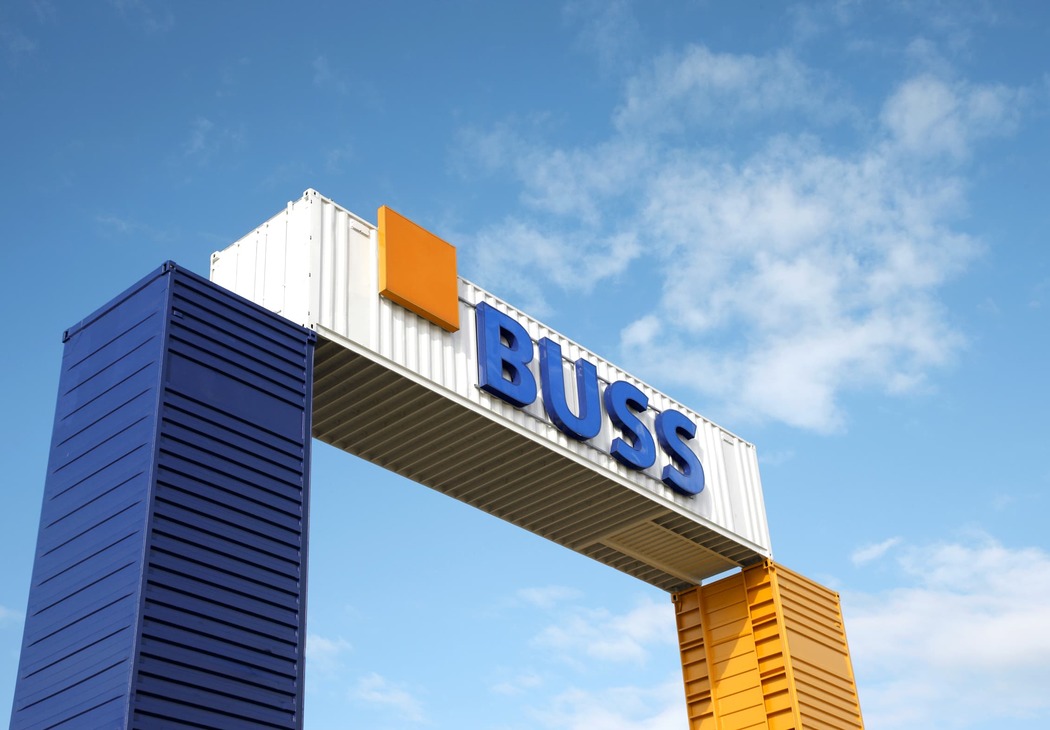
In the foyer, visitors are greeted by colorful containers by artists Philipp Ricklefs and Janine Eggert. The graduates of the University of Fine Arts (HFBK) in Hamburg have divided a standard container into individual dissimilar elements and painted them. Although the container did not exist in our founding year of 1920, it represents the link between the individual business areas.
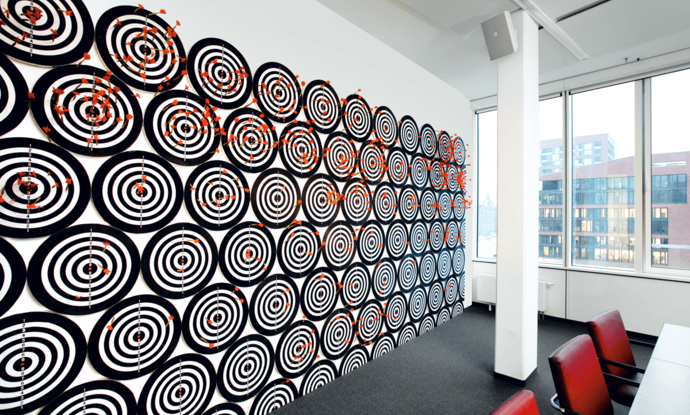
The World, Things, Love
In most of Jacob Dahlgren's realized installations and wall works, a formal preoccupation with seriality is evident. The Swedish artist works primarily with industrially produced standard forms or the simplest geometric building blocks. From these he creates compositions in which the individual form is subordinated to an overall image or pattern.

Abstract
For the artwork "Abstract," Jacob Dahlgren covered an entire wall with a colorful arrangement of rectangular modules. The cubes can be seen as a stylized representation of a container handling facility. Related to our logistics real estate company Ixocon, they can equally be interpreted as an artistic representation of commercial spaces and functional buildings.

Move it
Buss stands for globally operating liner services, container handling, transshipment of bulk, general and heavy cargo as well as logistics solutions. Accordingly, the elevator lobby presents a young artist whose working method visualizes processes of movement and transition. The complex linear compositions of the artist Takehito Koganezawa, who lives in Tokyo and Berlin, set the space into rhythms of light.


